Most people don't worry about their vision until a problem forces them to. The gradual blurring that sends you reaching for a brighter lamp, the increased glare on night drives that makes you grip the wheel tighter, the ache behind your eyes after eight hours facing a monitor — these aren't sudden catastrophes. They're the quiet accumulation of oxidative damage, blue-light stress, and nutritional gaps in a modern lifestyle that the eyes were never designed for. And by the time these symptoms feel significant, significant damage may already be underway at the cellular level.
Eye care research has been pointing in a consistent direction for decades: specific micronutrients — particularly the macular carotenoids Lutein and Zeaxanthin — play a measurable, protective role in long-term visual health. The Age-Related Eye Disease Study 2 (AREDS2), one of the most comprehensive eye nutrition trials ever conducted, confirmed this relationship definitively. The challenge is that most Western diets are severely deficient in these compounds, and even those who eat well rarely consume enough leafy greens and pigmented vegetables to reach optically meaningful concentrations in the macula.
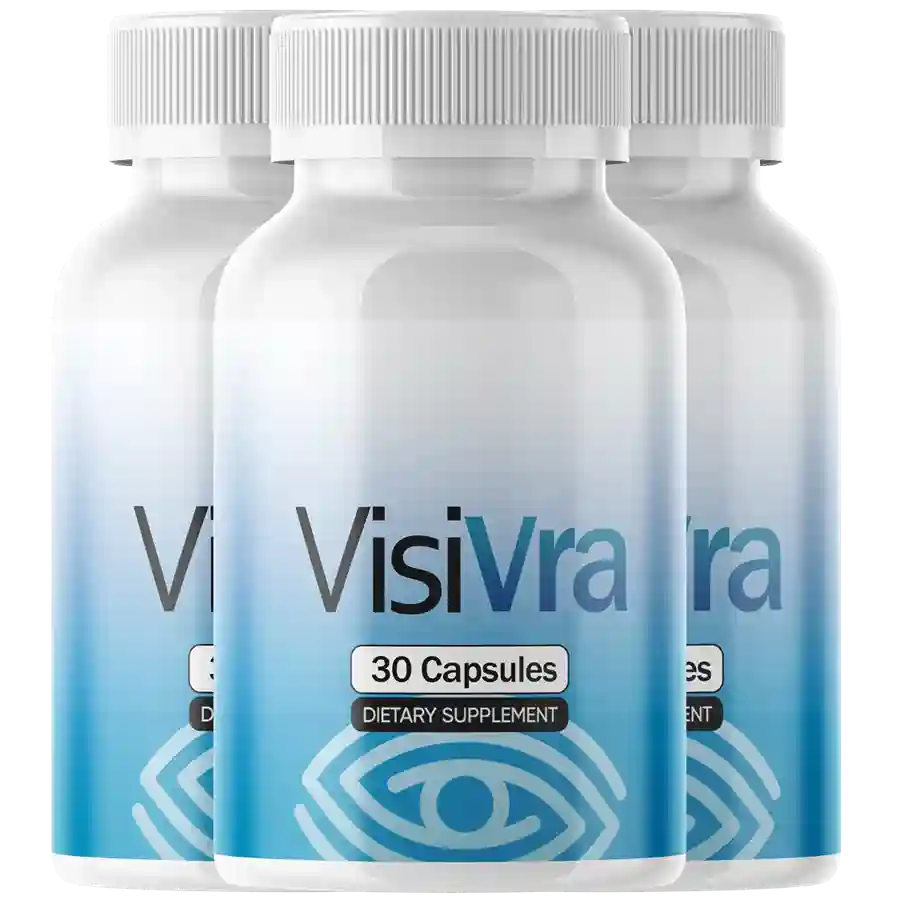
VisiVra is designed to fill that gap. A once-daily eye health capsule formulated with six evidence-referenced ingredients, it aims to provide the foundational nutritional support that the aging visual system increasingly needs. In this comprehensive visivra review, we examine every ingredient, the science behind it, the dosing strategy, who this product suits best, and whether the value proposition holds up against the alternatives in an increasingly crowded eye supplement market.
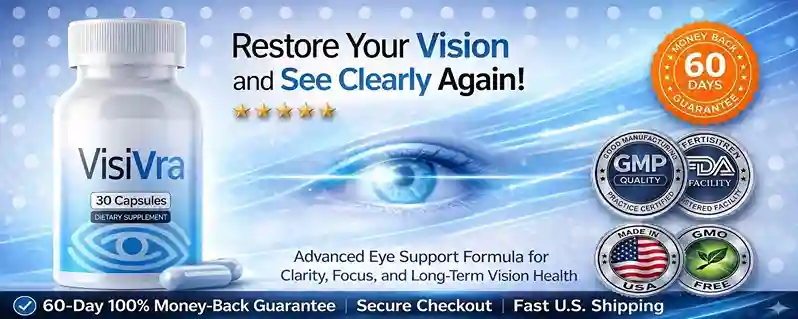
👁 Quick Take: VisiVra is a once-daily capsule eye health supplement with 6 natural ingredients — Lutein, Zeaxanthin, Bilberry Extract, Astaxanthin, Zinc, and Vitamin A. Designed to support macular health, visual clarity, retinal function, night vision, and protection from blue-light and oxidative stress. Taken once daily with the highest-fat evening meal. 60-day money-back guarantee. Free shipping on all packages. Made in the USA in a GMP-certified facility. Pricing from $33–$49/bottle.
What Is VisiVra? A Complete Product Overview
VisiVra is a dietary supplement capsule formulated specifically for eye health and visual wellness in adults. It is taken once daily — a single capsule, consumed with the largest fat-containing meal of the day, typically dinner. This timing recommendation is deliberate and scientifically grounded: four of VisiVra's six active ingredients are fat-soluble compounds (Lutein, Zeaxanthin, Astaxanthin, and Vitamin A), meaning their absorption from the digestive tract into the bloodstream is substantially enhanced when consumed alongside dietary fat. This is not a minor detail — studies on carotenoid bioavailability show absorption differences of 300–400% between fat-co-ingestion and fasted states.
The formula itself is built around the most research-validated ingredients in nutritional eye care. Rather than loading a formula with 15 minor herbs at trace doses, VisiVra focuses on six well-characterized compounds at meaningful concentrations — a targeted approach that prioritizes depth of evidence over breadth of marketing claims. The product is manufactured in the United States in a GMP-certified, FDA-registered facility, meeting the quality and safety benchmarks required of dietary supplements produced for the US market.
VisiVra is sold exclusively through the official website and authorized sources — it is not available through Amazon, retail pharmacies, or big-box stores. This direct-to-consumer model allows the brand to offer a 60-day money-back guarantee without the constraints of retail return policies.
Macular Protection
Lutein and Zeaxanthin concentrate specifically in the macula lutea — the central retinal region responsible for high-resolution, color vision. They act as a natural internal optical filter, absorbing harmful blue-light wavelengths before they can damage the photoreceptors and retinal pigment epithelium beneath.
Retinal Circulation
Bilberry Extract's anthocyanin pigments and Astaxanthin's carotenoid antioxidants support healthy microcirculation in the delicate capillary network that feeds the retina — the tissue with the highest metabolic demand and oxygen consumption per gram of any organ in the human body.
Oxidative Defense
Astaxanthin is one of the most potent natural antioxidants known to science — an estimated 6,000x stronger than Vitamin C on certain oxidative measures. Combined with Zinc's enzyme cofactor role in retinal antioxidant defense and Vitamin A's structural role in photoreceptor maintenance, VisiVra builds a layered antioxidant shield throughout the visual system.
Night Vision Support
Vitamin A (retinol) is the direct precursor to rhodopsin — the light-sensitive pigment in rod photoreceptors responsible for vision in low-light conditions. Adequate Vitamin A is irreplaceable for normal dark adaptation, and deficiency is a well-documented cause of night blindness even in otherwise healthy adults.
VisiVra Ingredients: The Science Behind Each One
VisiVra's formula contains six active ingredients. The brand does not publicly disclose individual milligram amounts per capsule, though the selection of compounds aligns precisely with the ingredients studied in major clinical eye nutrition research including the AREDS2 trial and multiple independent intervention studies. Here is a detailed breakdown of each ingredient and what the research says:
Lutein
Lutein is the dominant carotenoid in the macular pigment optical density (MPOD) of the human eye. It is not synthesized by the body — it must come from diet or supplementation. In the macula, Lutein acts as a broadband optical filter, absorbing short-wavelength blue-violet light before it reaches and photooxidizes the underlying photoreceptors and retinal pigment epithelium. The AREDS2 clinical trial — funded by the National Eye Institute and involving 4,203 participants over 5 years — confirmed that Lutein and Zeaxanthin supplementation reduces the risk of advanced AMD progression by 26% in individuals with low dietary intake. Regular supplementation measurably increases MPOD, which is a validated biomarker of macular health and visual performance under glare and contrast conditions.
Zeaxanthin
Zeaxanthin works in concert with Lutein in the macula, with the highest concentration in the very center (fovea centralis) where visual acuity is most critical. It is structurally similar to Lutein but with a distinct stereoisomeric arrangement that fills a complementary protective role at the central fovea. Research confirms that higher macular Zeaxanthin concentrations correlate with reduced risk of age-related macular degeneration, cataract formation, and glaucomatous optic nerve damage. Zeaxanthin is found in high concentrations in orange peppers, corn, and egg yolks — foods most people don't eat in sufficient quantities to maintain optimal macular pigment. As a supplement ingredient, Zeaxanthin's synergistic action with Lutein makes the two compounds most effective when taken together, as VisiVra formulates them.
Bilberry Extract
Bilberry (Vaccinium myrtillus) is a small European berry rich in anthocyanin polyphenols — the same dark-pigment compounds found in blueberries, but at higher concentrations. In eye health, Bilberry extract is best known for two distinct mechanisms: improving microcirculation in the retinal capillary network, which is essential for oxygen and nutrient delivery to the most metabolically demanding tissue in the body; and reducing the permeability of retinal blood vessels, which helps maintain the structural integrity of the retina. Studies published in the Journal of the Science of Food and Agriculture have documented Bilberry anthocyanins' ability to accelerate the regeneration of rhodopsin (the visual pigment) and reduce symptoms of eye fatigue in subjects with heavy visual workloads. For adults who spend extended hours in front of digital screens, Bilberry extract addresses the fatigue and strain component that the other carotenoid ingredients primarily don't target.
Astaxanthin
Astaxanthin is a marine carotenoid produced naturally by the microalgae Haematococcus pluvialis and found in the flesh of salmon, shrimp, and lobster. Its antioxidant potency is extraordinary — estimated to be 6,000 times stronger than Vitamin C, 800 times stronger than CoQ10, and 550 times stronger than Vitamin E on certain oxidative stress measures. For ocular health specifically, Astaxanthin crosses both the blood-retinal barrier and the blood-brain barrier — an ability most antioxidants lack — allowing it to deliver antioxidant protection directly to the retinal tissues. Clinical studies using 4–6 mg daily doses have shown Astaxanthin to significantly reduce symptoms of eye fatigue, improve blood flow in the choroid and retinal capillaries, and reduce dry eye symptoms in computer users. Research published in Nutrients and in the Journal of Clinical Biochemistry and Nutrition supports Astaxanthin's role as one of the most effective natural compounds for ocular microcirculation and anti-fatigue benefits in screen-heavy modern lifestyles.
Zinc
Zinc is an essential mineral with a specific, non-substitutable role in the visual system. The highest concentration of Zinc in the body is found in the retina and choroid — it functions as a critical cofactor for retinal alcohol dehydrogenase, the enzyme that converts Vitamin A (retinol) to its active visual form (retinal) in the photoreceptors. Without adequate Zinc, this conversion is impaired and visual function in low-light conditions deteriorates. Zinc also activates superoxide dismutase — the retina's primary antioxidant enzyme defense system — protecting photoreceptors from the oxidative damage generated by phototransduction itself. The AREDS2 trial included Zinc as one of its core ingredients precisely because of this established, evidence-based role. Zinc deficiency, while common in older adults, is associated with impaired dark adaptation and increased susceptibility to age-related retinal damage.
Vitamin A
Vitamin A (retinol) is the foundational nutrient of the visual system — literally irreplaceable for the biochemistry of sight. In the retina, Vitamin A is converted to 11-cis-retinal, the chromophore component of rhodopsin in rod photoreceptors and the iodopsin pigments in cone photoreceptors. Without adequate Vitamin A, rhodopsin cannot regenerate after light exposure, resulting in impaired dark adaptation — the clinical definition of night blindness. Beyond the retina, Vitamin A is essential for maintaining the mucosal goblet cells of the conjunctiva, which produce the mucin layer of the tear film. Deficiency in these cells is a primary cause of dry eye disease and corneal damage. The eyes depend on Vitamin A in multiple layers simultaneously — the supplement's inclusion of Vitamin A alongside the carotenoid ingredients creates a broad, complementary nutritional foundation for overall visual wellness rather than addressing only one aspect of eye health.
Taken together, VisiVra's six ingredients address the visual system through five biologically distinct mechanisms — a true multi-pathway approach to eye nutritional support. For a broader understanding of how nutritional supplements interact with the visual system and what ingredients to look for, our comprehensive health supplements guide includes a dedicated section on evidence-based eye health ingredients. And if you've previously reviewed our VisiFlora eye supplement review, you'll find VisiVra takes a notably different formulation approach — heavier on the carotenoid antioxidant side and lighter on herbal adaptogens.
How Does VisiVra Work? The Mechanism Explained
Understanding how VisiVra functions requires a brief look at what goes wrong with vision over time. The retina — particularly the macula — is the most metabolically active tissue in the body, consuming more oxygen per unit weight than even the heart. This high metabolic rate generates correspondingly high levels of reactive oxygen species (free radicals) as a byproduct of normal visual processing. The photons of light that the photoreceptors convert into neural signals also carry energy that, if not managed, generates oxidative stress directly in the light-absorbing layers of the retina.
Simultaneously, the modern environment imposes stresses that evolution never prepared the human eye for: prolonged high-intensity blue-light exposure from LED screens and energy-efficient lighting, reduced outdoor time that decreases melanopsin-driven circadian regulation of ocular blood flow, and diets low in carotenoid-rich vegetables that have thinned the macular pigment layer that once acted as a natural protective filter.
VisiVra addresses these converging threats through its layered ingredient system: Lutein and Zeaxanthin rebuild and maintain macular pigment density; Astaxanthin and Bilberry protect the retinal microcirculation and neutralize oxidative damage; Zinc maintains the retina's antioxidant enzyme defenses and enables Vitamin A metabolism; and Vitamin A itself keeps the photoreceptors functioning and the corneal surface healthy. The fat-soluble ingredients absorb best alongside dietary fat — which is why the brand specifically recommends taking the capsule with dinner, the most naturally fat-containing meal of the day for most adults.
Who Is VisiVra Best For?
VisiVra is designed for adults who want daily nutritional support for their visual system. The formula's design makes it most logically well-suited for:
- Adults over 40 experiencing the gradual visual changes associated with aging macula and retinal health
- People with significant daily screen exposure (8+ hours) who experience digital eye strain, end-of-day eye fatigue, or reduced visual sharpness
- Individuals who have been told by their optometrist that their macular pigment density is suboptimal
- Adults with family history of age-related macular degeneration or cataracts wanting proactive nutritional defense
- People with low dietary intake of leafy greens, orange/yellow vegetables, and eggs — the primary dietary sources of Lutein and Zeaxanthin
- Individuals who experience difficulty seeing clearly in low-light environments or increased glare sensitivity when driving at night
- Adults who work in environments with high artificial light exposure or outdoors in bright sunlight
VisiVra is not a treatment for any diagnosed eye condition. Anyone already managing glaucoma, AMD, diabetic retinopathy, cataracts, or other clinical eye diseases should consult their ophthalmologist before adding any supplement to their regimen. VisiVra does not replace prescription eye medication or surgical interventions — it is a nutritional supplement for proactive wellness support, not a medical treatment.
VisiVra Pros and Cons
Pros
- 6 research-referenced eye health ingredients
- Includes both Lutein + Zeaxanthin — the AREDS2-validated pair
- Astaxanthin — one of nature's most potent antioxidants
- Bilberry Extract for retinal circulation + eye fatigue
- Zinc — essential retinal enzyme cofactor
- Vitamin A — irreplaceable for night vision
- Once-daily capsule — simple and consistent
- Fat-with-dinner timing maximizes carotenoid absorption
- Made in USA, GMP-certified, FDA-registered facility
- 60-day money-back guarantee
- Free shipping on all packages
- No subscription required
Cons
- Individual mg doses not publicly disclosed
- No finished-product clinical trial
- Company name and address not prominently listed
- Results build slowly — not a quick fix
- Must be taken with a fat-containing meal for best results
- Not suitable for managing diagnosed eye diseases
Real VisiVra Customer Reviews and Results
Customer feedback on VisiVra reflects the gradual, cumulative nature of carotenoid eye supplementation — the most consistent positive reports come from users who gave the formula a full 6–8 weeks before assessing results, and who maintain consistent daily use. The most frequently cited improvements involve digital eye fatigue, nighttime driving comfort, and color vividness — all effects consistent with the formula's ingredient mechanisms.
"I spend 9–10 hours a day at a computer and by evening my eyes felt strained and dry constantly. After six weeks on VisiVra, the fatigue has noticeably reduced and my vision feels less foggy after long screen sessions. Very pleasantly surprised."
"I'm 61 and my optometrist mentioned my macular pigment density could use support. I've been taking VisiVra for two months alongside a healthy diet. Colors seem slightly more vivid and I notice less glare when driving at night. Solid supplement for the price."
"My mother started VisiVra after her eye doctor mentioned AMD risk. After three months she says she's reading with less strain and finds her eyes tire later in the evening. We'll keep going — the 60-day guarantee made it easy to try without risk."
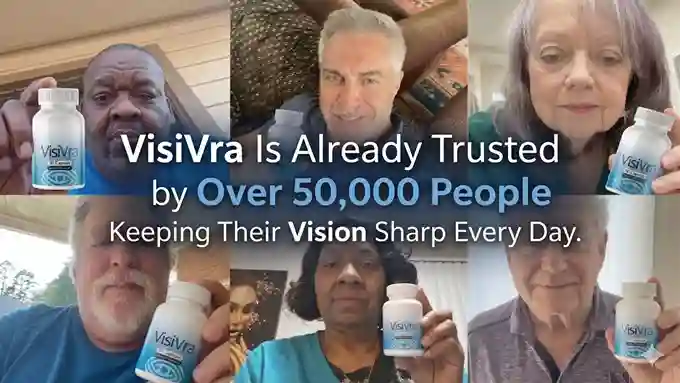
The pattern seen in VisiVra customer reviews mirrors what clinical research on macular carotenoid supplementation consistently shows: measurable improvements in visual comfort, contrast sensitivity, and low-light performance emerge after 4–12 weeks of consistent daily use. This is not a supplement where you feel the difference in 48 hours — the biological process is one of gradually rebuilding macular pigment density, and that takes sustained supplementation time.
Eye health is also deeply connected to cardiovascular function and systemic inflammation — the same inflammatory pathways that damage blood vessels throughout the body also affect the delicate retinal microcirculation. For adults managing blood pressure alongside eye health, our Cardio Shield blood pressure review and PressureCalmX supplement review explore cardiovascular support formulas that complement an eye health protocol. The gut-eye axis — the emerging research linking gut microbiome health to ocular inflammatory conditions — is another reason our Villora gut health review is relevant reading for anyone serious about long-term visual wellness.
Sleep quality also has a direct and measurable impact on ocular health — the eyes flush metabolic waste during deep sleep stages, and chronic sleep disruption accelerates the accumulation of oxidative byproducts in retinal tissues. Our review of The Downshift sleep and recovery program covers the sleep side of the eye health equation for adults who find restful sleep elusive. And for adults focused on holistic cellular health alongside visual wellness, our Reviralis Complete review examines a multi-system cellular support formula that pairs well with a targeted eye supplement like VisiVra.
VisiVra Pricing and Packages
VisiVra is available in three packages, all with free shipping and covered by the 60-day money-back guarantee:
The 3-bottle package is the natural recommendation for new users. A 90-day supply covers three full monthly cycles, which is the minimum period recommended for assessing meaningful change in macular pigment optical density from carotenoid supplementation. The per-bottle cost drops from $49 to approximately $39 — a 20% reduction. The 6-bottle package at approximately $33/bottle offers the best long-term value for adults committed to ongoing visual wellness support, and brings the daily cost down to about $1.10 per capsule.
Support Your Vision with VisiVra
6 proven ingredients · once-daily capsule · 60-day guarantee · free shipping on all orders.
Get VisiVra at the Official Price →The 60-Day Money-Back Guarantee
60-Day Satisfaction Guarantee
Every VisiVra order is backed by a 60-day money-back guarantee. If you don't experience the results you expected within two months, contact VisiVra customer support through the official website for a full refund. The 60-day window is specifically aligned with the minimum time needed for fat-soluble carotenoids like Lutein and Zeaxanthin to build macular pigment density — making this guarantee genuinely meaningful rather than performative. It removes the financial risk from committing to the supplement duration that the science actually requires for proper evaluation.
VisiVra vs. Other Eye Supplements: How Does It Compare?
The eye supplement market has expanded significantly as screen time has increased and AMD awareness has grown. Products range from single-ingredient Lutein capsules to complex multi-herb eye formulas. VisiVra occupies a focused but comprehensive position: six well-chosen, evidence-grounded ingredients at a price point that makes long-term supplementation accessible.
What distinguishes VisiVra from simpler Lutein-only or AREDS-clone formulas is the inclusion of Astaxanthin and Bilberry Extract — two ingredients not in the original AREDS2 formula but with solid independent research supporting their complementary benefits, particularly for retinal microcirculation and digital eye fatigue. The Bilberry-Astaxanthin combination addresses the modern screen-use context that wasn't a consideration when AREDS2 was designed in the early 2000s.
Compared to premium eye supplements with more ingredients (12–20 herbs), VisiVra's six-ingredient focus means each component is included for a specific, documented reason rather than to populate a lengthy label. The trade-off is fewer synergistic herbs — but for adults whose primary concerns are macular health, oxidative protection, and digital eye fatigue, VisiVra's six ingredients address the most important bases efficiently.
What Does the Clinical Research Say?
The individual ingredient evidence underlying VisiVra is robust. The NIH National Eye Institute's AREDS2 study — the most comprehensive eye nutrition trial ever conducted — confirmed that Lutein and Zeaxanthin supplementation reduces progression to advanced AMD by 26% in high-risk individuals. Astaxanthin's ocular benefits are documented across multiple peer-reviewed trials including a 2016 randomized controlled trial in the Journal of Clinical Biochemistry and Nutrition showing significant reduction in eye fatigue in computer workers. The American Academy of Ophthalmology specifically endorses carotenoid supplementation for individuals at risk of AMD, validating the core logic of VisiVra's formula. Bilberry anthocyanins for retinal circulation are supported by research including a 2012 review in the Evidence-Based Complementary and Alternative Medicine journal confirming improvements in eye fatigue and low-light visual performance.
Beyond eye health, holistic wellness plays a role in visual outcomes over the long term. Nerve health affects the optic nerve and visual processing pathways — our Nervecept nerve health review covers neurological nutritional support relevant to anyone concerned about optic nerve health. Oral health may seem unrelated to vision, but emerging research on the oral microbiome's systemic inflammatory influence makes our Oxydental Pro dental health review worth reading for the full picture of systemic health management.
VisiVra Frequently Asked Questions
Our Verdict: Is VisiVra Worth It in 2026?
After a thorough analysis of VisiVra's formula, the clinical research on its six ingredients, and the overall value proposition — our assessment is that VisiVra represents a genuinely well-constructed eye health supplement for adults seeking daily nutritional support for visual wellness.
The formula's core strength is the coherence of its six ingredients: each one addresses a specific, documented mechanism in the visual system, and together they cover the major nutritional bases — macular carotenoid protection, retinal microcirculation support, antioxidant defense from photoreceptor to cornea, night vision maintenance, and digital fatigue reduction. The inclusion of Astaxanthin alongside the AREDS2-validated Lutein and Zeaxanthin pair makes VisiVra particularly relevant for the modern screen-heavy adult in ways that older AREDS-clone formulas aren't optimized for.
The limitations are real and worth naming honestly: individual ingredient doses are not publicly disclosed, limiting direct comparison to research-validated amounts. There is no finished-product clinical trial on VisiVra specifically. The company's name and address are not prominently featured on the product page. And as with all carotenoid supplements, results require patience — this is a 3-month investment, not a 3-day one.
For adults over 40 who spend significant time on screens, have a family history of AMD, or experience increasing visual fatigue and low-light discomfort, VisiVra is a logical, evidence-grounded supplementation choice. The 60-day guarantee makes the initial trial financially risk-free, and the 3-bottle package provides the full evaluation window the science actually requires.
Try VisiVra Risk-Free — 60-Day Guarantee
Lutein · Zeaxanthin · Bilberry · Astaxanthin · Zinc · Vitamin A. Once daily. Free shipping.
Order VisiVra at the Official Price →Disclosure: CaresDigest may earn an affiliate commission if you purchase VisiVra through links on this page. This does not affect our editorial independence or the integrity of our review. These statements have not been evaluated by the Food and Drug Administration. VisiVra is not intended to diagnose, treat, cure, or prevent any disease. Individual results may vary. Always consult a qualified healthcare provider — particularly an optometrist or ophthalmologist — before starting any new dietary supplement, especially if you are pregnant, breastfeeding, taking prescription medications, or have an existing eye condition.